Stored in the core
Biogenic carbon stored within the hemp-lime core and additional lime carbonation.
Hemp growth Biogenic storage Lime carbonation
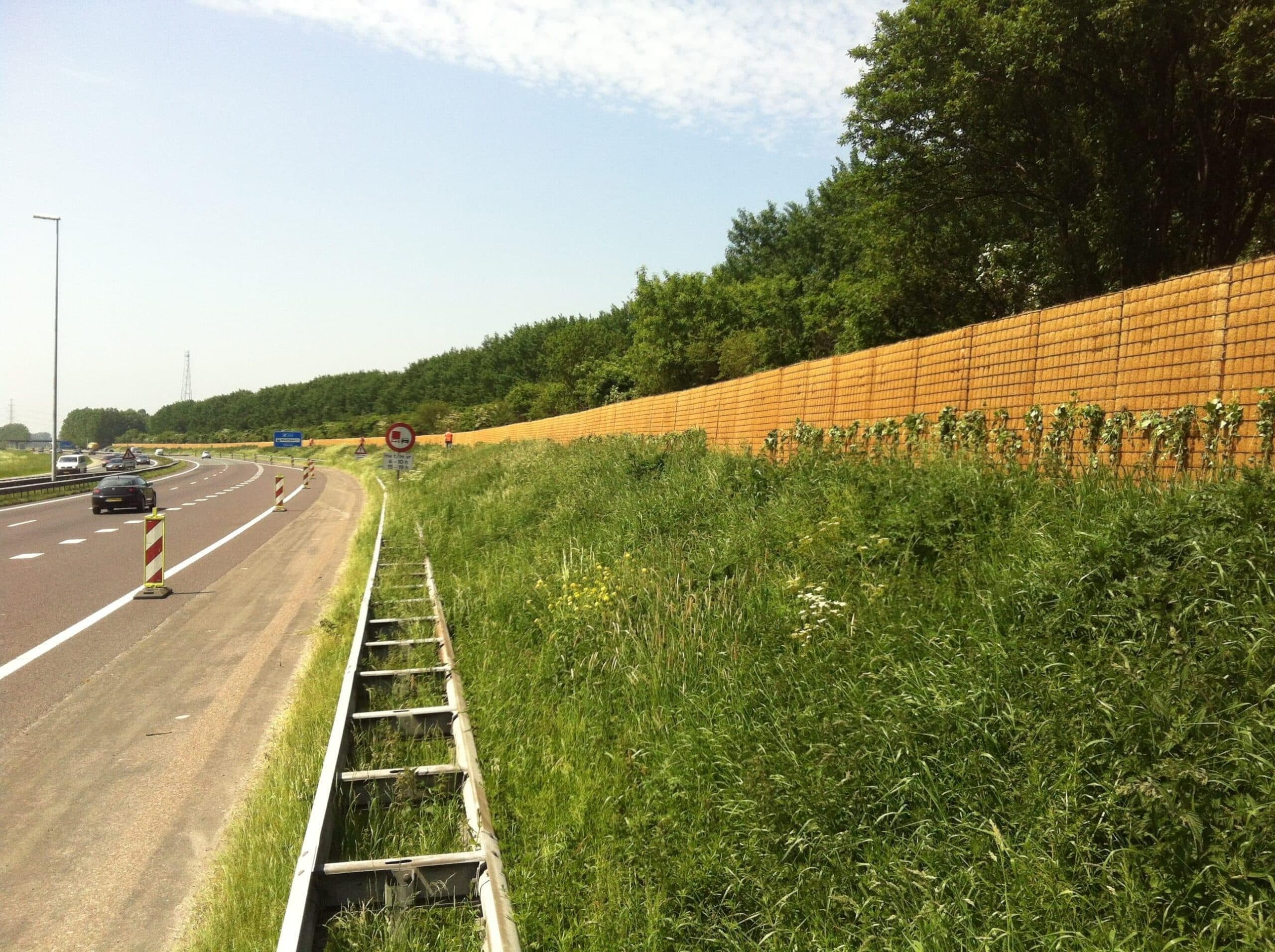
Greenwall is designed to do more than reduce noise.
Greenwall Classic’s hempcrete (hemp-lime) core and living planted surface create the potential for the barrier to store biogenic carbon, continue absorbing CO₂, help intercept airborne pollution and contribute to Biodiversity Net Gain.
Necessary infrastructure can become measurable environmental infrastructure.
Explore the environmental value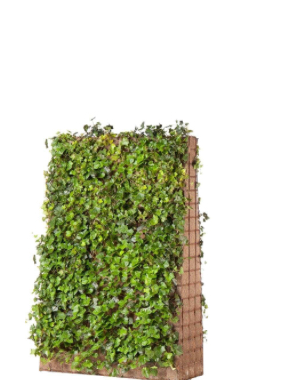
Greenwall Classic is our lead product for biogenic carbon storage. Its hempcrete core combines hemp and a lime-based binder.
Hemp absorbs CO₂ from the atmosphere as it grows. When hemp is incorporated into the Greenwall Classic hemp-lime core, part of that biogenic carbon can remain stored within the barrier for the life of the product.
The lime binder also continues to mature after installation. Through carbonation, the lime reacts with atmospheric CO₂ and forms calcium carbonate, taking CO₂ back into a solid mineral form over time.
The hemp stores carbon. The lime continues to mineralise CO₂ as the wall matures.
The precise carbon performance depends on material formulation, manufacturing, transport, installation, exposure and end-of-life assumptions and should be quantified through an appropriate lifecycle methodology.
Different cores. Different carbon pathways. Classic’s hempcrete core supports the stored-biogenic-carbon story. Construct’s mineral or recovered-aggregate fill has a separate material and lifecycle assessment, with potential benefits from suitable material recovery and avoided haulage. Any claim of net carbon removal requires verification across the relevant lifecycle.
Greenwall can support living vegetation such as ivy and other selected species.
As the planting grows, it continues to take CO₂ from the atmosphere through photosynthesis and stores carbon within its biomass.
This creates two different carbon mechanisms within one infrastructure asset:
Biogenic carbon stored within the hemp-lime core and additional lime carbonation.
Ongoing biological growth and CO₂ uptake from the living planting.
For qualifying hemp-lime installations. Environmental outcomes are assessed separately; a record captures the evidence rather than guaranteeing carbon or BNG performance.
Vegetation can help capture airborne particulate matter on leaf surfaces.
For roadside, rail, logistics, industrial and urban locations, this creates an additional potential environmental benefit because the living barrier is positioned close to the pollution source.
Living foliage can help intercept airborne particulate pollution while also supporting carbon uptake and biodiversity.
The effect depends on planting, exposure, maintenance and local airflow. This is a potential benefit, not a claim that Greenwall removes all air pollution.
Many developments already require acoustic fencing, boundary infrastructure, road mitigation or visual screening.
Greenwall creates the opportunity for that required infrastructure to also support planting, habitat creation and ecological connectivity.
Subject to ecological assessment and the statutory biodiversity metric, appropriately designed Greenwall planting may contribute towards a development’s Biodiversity Net Gain strategy.
Instead of installing an inert barrier and then addressing biodiversity somewhere else, make the infrastructure itself part of the ecological response.
BNG value must be assessed independently by the project ecologist and should not be assumed simply because the barrier is planted.
Engineered acoustic performance for roads, railways, developments and industrial locations.
Biogenic carbon stored within the hemp-lime core, with additional carbonation potential from the lime binder.
CO₂ uptake, planted surfaces and potential air-quality benefits.
Planting and habitat design that may contribute towards the development’s BNG strategy.
One physical asset. Multiple measurable environmental outcomes.
Greenwall is working with CarbonSync to create a digital environmental record for qualifying installations.
Each registered Greenwall asset can be linked to its physical location, material specification, planting, maintenance history and environmental performance.
CarbonSync can record information including:
Move from “this is a sustainable wall” to “this is an identifiable environmental asset with measurable performance.”
Greenwall can create a new route for corporate environmental participation.
Corporate emitters and ESG participants could fund defined sections of qualifying Greenwall infrastructure, while the wall itself remains professionally installed and maintained by the contractor.
CarbonSync can then record the participant’s attributable environmental interest against the physical asset and track verified outcomes over time.
Developer needs acoustic infrastructure
Greenwall provides the living hemp-lime barrier
Contractor installs it safely
CarbonSync registers the asset
Corporate participant funds or is attributed a defined share
Environmental performance is measured over time
Don’t just purchase an environmental claim. Help finance the infrastructure creating the environmental value.
A Greenwall installation may create several environmental benefits from the same physical infrastructure, but they must be measured and reported separately.
Stored biogenic carbon, lime carbonation and ongoing biological sequestration where appropriately measured.
Habitat creation and enhancement assessed through the relevant ecological and Biodiversity Net Gain methodology.
The underlying acoustic and physical performance of the barrier.
Biodiversity units are not carbon credits, and carbon tonnes are not biodiversity units.
This separation is important for credible environmental accounting. A digital asset record does not by itself verify an outcome or issue a carbon credit. Any attribution requires clear boundaries, evidence and safeguards against double counting.
Greenwall takes infrastructure that already needs to be built and asks it to work harder.
Potential outcomes are specific to the installation, material and planting specification, and subject to verification and ecological assessment.
Explore early-stage project and budget tools